
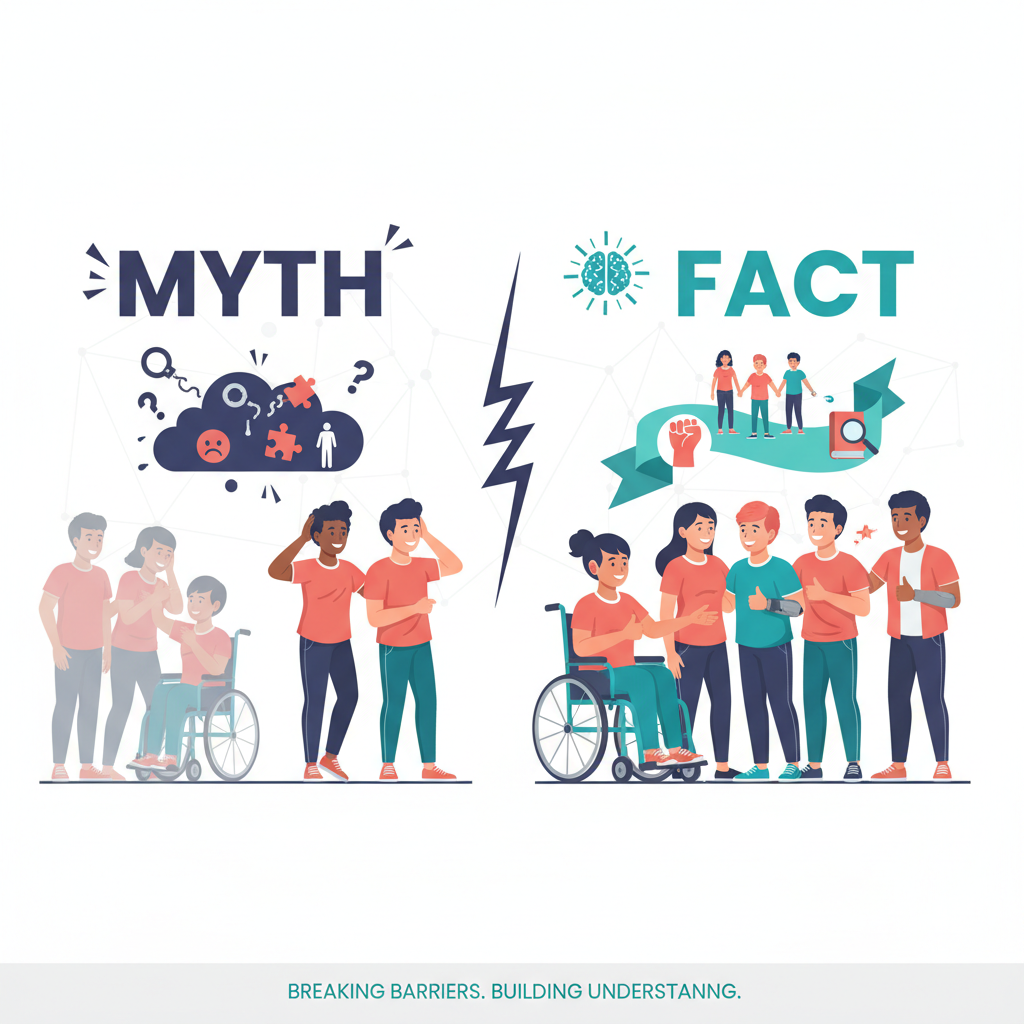
Breaking Myths About Special Needs: What’s True and What’s Not
Part 3 of 5 — Special Needs Series
When talking about special needs, there is still a lot of confusion.
Many of the challenges faced by young people with special needs are not caused by the condition itself, but by misunderstandings, assumptions, and stereotypes. These myths can shape how people are treated at school, in friendships, and in everyday life.
This blog explores some of the most common myths — and, importantly, how we can challenge them.
This is Part 3 of a 5-part series on Special Needs. Part 1: What Does 'Special Needs' Really Mean Today? Part 2: Understanding Different Types of Special Needs Part 3: Breaking Myths About Special Needs (you are here) Part 4: Supporting Young People with Special Needs: Practical Strategies for Everyone Part 5: Creating an Inclusive Future
Why Myths Matter
Myths about special needs are not harmless. They can:
- Lower expectations
- Create stigma
- Lead to exclusion
- Impact confidence and self-esteem
Often, the biggest barriers are not physical or educational, but social. The way people think and behave can directly affect whether someone feels included or left out.
Challenging these myths is an important step towards building a more understanding and inclusive society.
Myth 1: "People with Special Needs Are Less Capable"
This is one of the most common and harmful assumptions.
The Reality
Having special needs does not define a person's intelligence or potential. With the right support, individuals can succeed in education, work, and everyday life.
What Helps
- Focus on strengths, not just challenges
- Set high but realistic expectations
- Recognise progress and celebrate achievements
- Encourage confidence by providing opportunities to succeed
Myth 2: "All Special Needs Are the Same"
It is easy to assume that one label means one type of experience.
The Reality
Special needs cover a wide range of conditions. Each individual has unique needs, abilities, and ways of learning.
What Helps
- Avoid making assumptions based on labels
- Take time to understand individual needs
- Promote flexible approaches to learning and support
- Encourage open conversations about what works best
Myth 3: "People with Special Needs Always Need Help"
Some people believe individuals with disabilities are always dependent on others.
The Reality
Many people with special needs are independent and capable of managing their own lives. Support may be needed in certain situations, but not constantly.
What Helps
- Offer help respectfully by asking first
- Encourage independence wherever possible
- Build skills that support self-reliance
- Respect people's choices and decision-making
Myth 4: "All Disabilities Are Visible"
There is often an assumption that you can tell if someone has a disability just by looking at them.
The Reality
Many disabilities are invisible, including learning difficulties, mental health conditions, and chronic illnesses. These are just as valid as visible conditions.
What Helps
- Avoid judging based on appearance
- Be understanding when someone shares their needs
- Raise awareness of invisible disabilities
- Create environments where people feel comfortable speaking up
Myth 5: "Students with Special Needs Should Be Separate"
Some believe that students with special needs should learn separately from others.
The Reality
Inclusive education allows students to learn together, which benefits everyone. It supports social development, understanding, and a sense of belonging.
What Helps
- Encourage inclusive classrooms and activities
- Promote teamwork and collaboration
- Support peer learning and friendships
- Value diversity in learning environments
Myth 6: "Special Needs Means a Poor Quality of Life"
There is sometimes an assumption that having special needs limits happiness or success.
The Reality
People with special needs can lead fulfilling, successful, and meaningful lives. Quality of life is shaped by opportunity, support, and inclusion — not by the condition itself.
What Helps
- Challenge negative or limiting language
- Share positive and realistic experiences
- Encourage participation in activities and community life
- Promote equal opportunities in education and beyond
Building a More Inclusive Mindset
Challenging myths is not just about correcting facts — it is about changing attitudes.
Simple actions can make a significant difference:
- Being open to learning
- Asking respectful questions
- Treating people as individuals
- Creating inclusive spaces
Small changes in behaviour can lead to stronger, more inclusive communities.
Final Reflection
Myths about special needs often come from a lack of understanding.
By questioning assumptions and learning the truth, we can create environments where everyone feels supported, respected, and included.
Inclusion is not just about awareness — it is about how we think, speak, and act every day.
References
- AmeriDisability — 13 Myths & Facts Pertaining to People with Disabilities
- Disability Horizons — Common Myths and Misconceptions About Disability
- Understood — 10 Special Education Myths You May Hear
- disABLEd guy — 10 Common Myths About Disabilities – And the Truth Behind Them
- Psychology Town — Debunking Myths and Misconceptions About Disabilities
- PsycApps — Common Myths and Misconceptions About SEN Individuals