
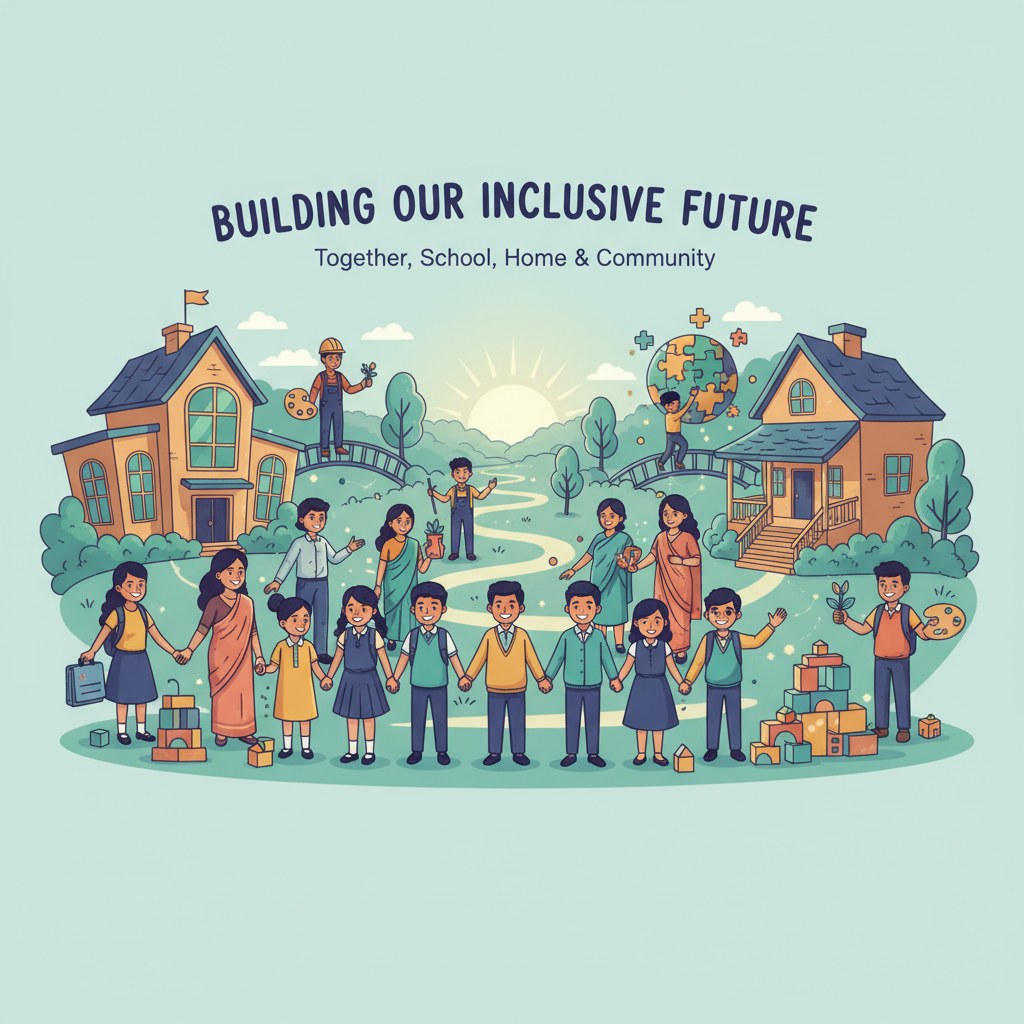
Creating an Inclusive Future: The Role of Young People, Schools, and Society
Part 5 of 5 — Special Needs Series
Throughout this series, we have explored what special needs means, the different types that exist, and the myths that can affect understanding. We have also looked at practical ways to support young people in everyday life.
This final blog brings everything together with one key idea: inclusion is not something that happens automatically — it is something we create.
Building an inclusive future requires effort from individuals, schools, families, and wider society. Most importantly, it requires young people themselves to be part of that change.
This is Part 5 of a 5-part series on Special Needs. Part 1: What Does 'Special Needs' Really Mean Today? Part 2: Understanding Different Types of Special Needs Part 3: Breaking Myths About Special Needs Part 4: Supporting Young People with Special Needs: Practical Strategies for Everyone Part 5: Creating an Inclusive Future (you are here)
Why Inclusion Matters
Inclusion is about more than simply being present. It is about:
- Feeling valued
- Having equal opportunities
- Being able to participate fully in life
Research consistently shows that inclusive environments improve academic outcomes, social development, and emotional wellbeing for young people with special needs. At the same time, inclusion also benefits those without special needs by promoting empathy, collaboration, and understanding.
Inclusion therefore strengthens not only individuals, but entire communities.
The Role of Young People
Young people play a powerful role in shaping inclusive environments.
Everyday interactions — friendships, conversations, group work — can either reinforce exclusion or promote inclusion.
1. Build Awareness and Understanding
- Learn about different needs and experiences
- Challenge stereotypes and myths when they arise
2. Be Inclusive in Everyday Situations
- Include others in group activities
- Be mindful of communication and behaviour
- Respect differences in how people interact
3. Use Your Voice
- Speak up when you see unfair treatment
- Promote inclusion through student groups, campaigns, or discussions
4. Value Difference
- Recognise that everyone brings something unique
- Understand that diversity strengthens communities
Young people are not just participants in inclusion — they are active contributors to it.
The Role of Schools
Schools are one of the most important spaces where inclusion is experienced daily. Inclusive schools do more than provide support — they create environments where all students can thrive.
1. Whole-School Inclusion Strategies
- Develop policies that prioritise inclusion
- Ensure support is consistent across all areas of school life
2. Evidence-Based Teaching Practices
- Use differentiated instruction to support diverse learning styles
- Apply inclusive frameworks such as Universal Design for Learning (UDL)
- Provide flexible assessment methods
3. Focus on Relationships and Wellbeing
- Support social and emotional development
- Encourage positive peer relationships
4. Professional Development for Staff
- Equip teachers with the knowledge and skills to support diverse learners
- Promote continuous learning and reflection
5. Collaboration with Families and Communities
- Engage parents as partners in education
- Build strong communication channels
Research shows that inclusive educational approaches improve both learning outcomes and social participation, particularly when schools adopt flexible, student-centred strategies.
The Role of Families
Families are central to a young person's development and sense of identity. Their role in inclusion is both supportive and empowering.
1. Advocate for Needs and Support
- Work collaboratively with schools and professionals
- Ensure the young person's voice is heard
2. Encourage Confidence and Independence
- Support skill development over time
- Promote opportunities for decision-making
3. Build Strong Partnerships
- Maintain open communication with educators
- Share insights about strengths, challenges, and preferences
4. Create a Positive Environment at Home
- Focus on strengths and achievements
- Encourage resilience and self-belief
Research highlights that strong family engagement is linked to improved educational, social, and emotional outcomes for children with special needs.
The Role of Communities
Inclusion does not stop at the school gate. Communities play a key role in shaping attitudes and opportunities.
1. Promote Awareness and Education
- Provide opportunities to learn about diversity and inclusion
- Challenge stereotypes and misconceptions
2. Create Accessible Spaces
- Ensure physical, social, and communication accessibility
- Consider diverse needs when planning events and services
3. Encourage Participation
- Provide inclusive activities and opportunities
- Support involvement in community life
4. Build Inclusive Networks
- Connect families, schools, and support organisations
- Share resources and knowledge
Inclusive communities remove barriers and create environments where all individuals can participate fully.
Working Together: A Shared Responsibility
One of the strongest messages throughout this series is that inclusion is a shared responsibility.
It works best when:
- Young people promote understanding
- Schools provide structured support
- Families offer guidance and advocacy
- Communities create inclusive spaces
When these elements work together, they create a system where young people with special needs are not only supported — but enabled to succeed.
Final Reflection
Creating an inclusive future is an ongoing process.
It requires:
- Awareness
- Understanding
- Consistent action
Most importantly, it requires a shift in thinking — from seeing differences as challenges to recognising them as part of human diversity.
Inclusion is not about changing individuals to fit systems. It is about changing systems to support individuals.
By working together across all areas of life, we can build a future where every young person feels valued, supported, and able to thrive.
References
- Bhat, R. A. (2023). Inclusive Education: Strategies for Enhancing Participation and Achievement of Students with Special Needs
- Liu, X., & Potmesil, M. (2024). A Review of Research on Inclusive Education for Children with Special Educational Needs (Frontiers in Education)
- Miller, E. K. et al. (2025). Strengthening Education Through Equitable and Inclusive Evidence-Based Teaching Practices (Education Sciences)
- Saha, U., & Subba, D. (2025). Classroom Strategies for Inclusive Education: Insights from Recent Research
- Lindner, K. T. et al. (2022). Promoting Social Inclusion of Students with Special Educational Needs (Frontiers in Education)
- National Academies of Sciences, Engineering, and Medicine (2016). Parenting Matters: Supporting Parents of Children Ages 0–8
- Pérez, M., & Ríos, N. (2024). The Effectiveness of Early Intervention Programs for Children with Special Needs
- Spicer, L. et al. (2025). Five Strategies for Disability Inclusive Education (Institute of Development Studies)
- United Nations (2006). Convention on the Rights of Persons with Disabilities