
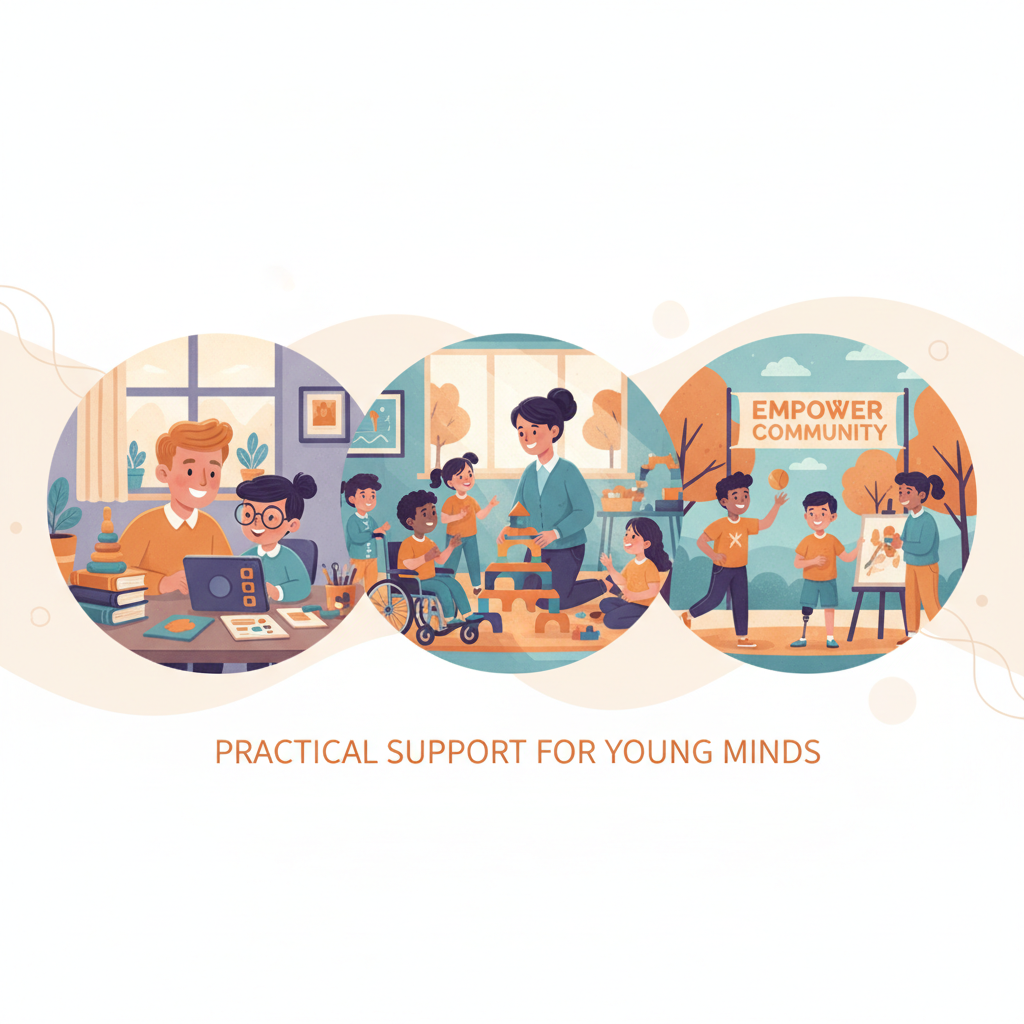
Supporting Young People with Special Needs: Practical Strategies for Everyone
Part 4 of 5 — Special Needs Series
In the previous blogs, we explored what special needs means, the different types that exist, and some of the common myths surrounding them.
The next step is to focus on something practical: how can we better support young people with special needs in everyday life?
Support is not just the responsibility of one group. It involves families, schools, and communities working together. When this happens effectively, young people are more likely to feel confident, included, and able to reach their potential.
This is Part 4 of a 5-part series on Special Needs. Part 1: What Does 'Special Needs' Really Mean Today? Part 2: Understanding Different Types of Special Needs Part 3: Breaking Myths About Special Needs Part 4: Supporting Young People with Special Needs: Practical Strategies for Everyone (you are here) Part 5: Creating an Inclusive Future
Why Support Matters
Research shows that the right support can have a significant impact on a young person's academic progress, social development, and overall wellbeing. Inclusive approaches, particularly in education, are linked to improved participation, confidence, and achievement for students with special needs.
Support is most effective when it is:
- Consistent
- Personalised
- Collaborative
It is not about changing the individual — it is about creating environments where everyone can succeed.
Supporting Young People at Home
Guidance for Parents and Carers
Families play a central role in shaping a young person's development.
1. Build Strong, Supportive Relationships
- Listen actively and show understanding
- Focus on strengths as well as challenges
- Create a safe and encouraging environment
2. Work in Partnership with Schools
- Communicate regularly with teachers
- Share important information about your child's needs
- Be involved in planning support strategies
3. Use Consistent Routines
- Clear routines can help reduce anxiety and improve focus
- Predictability supports emotional stability
4. Encourage Independence
- Allow young people to try tasks themselves
- Support skill-building gradually over time
5. Seek Early Support Where Needed
- Early intervention has been shown to improve long-term outcomes across cognitive, social, and emotional development
Families are not expected to have all the answers. Support systems exist to help parents navigate challenges and access appropriate services.
Supporting Young People in Schools
Schools play a key role in creating inclusive and supportive environments.
1. Use Inclusive Teaching Approaches
- Adapt teaching methods to suit different learning styles
- Provide information in multiple formats (visual, verbal, practical)
- Allow different ways for students to demonstrate understanding
2. Differentiate Learning
- Break tasks into manageable steps
- Provide additional time where needed
- Use flexible assessment methods
3. Create an Inclusive Classroom Environment
- Encourage respect and understanding among students
- Promote collaboration and peer support
- Ensure all students feel valued
4. Use Assistive Technology and Resources
- Tools such as speech-to-text software or visual aids can support learning
- Technology can remove barriers and increase participation
5. Invest in Teacher Training and Development
- Ongoing professional development helps teachers better understand diverse needs
- Skilled teachers are key to successful inclusion
6. Focus on Social as Well as Academic Development
- Support emotional wellbeing
- Build social skills through group activities and interaction
Research highlights that approaches such as Universal Design for Learning (UDL), differentiated instruction, and cooperative learning can significantly improve engagement and outcomes for students with special needs.
Supporting Young People in Communities
Support does not stop at home or school. Communities also play an important role in inclusion.
1. Promote Awareness and Understanding
- Educate others about special needs
- Challenge stereotypes and misconceptions
- Encourage open and respectful conversations
2. Create Accessible Environments
- Ensure spaces, activities, and services are inclusive
- Consider physical, social, and communication barriers
3. Encourage Participation
- Provide opportunities for all young people to take part in activities
- Support involvement in sports, arts, and social groups
4. Build Inclusive Networks
- Encourage connections between families, schools, and support services
- Strengthen community relationships
5. Listen to Young People Themselves
- Include their voices in decisions that affect them
- Recognise their experiences and perspectives
Research shows that community engagement is essential for building inclusive systems and improving long-term outcomes for individuals with special needs.
The Importance of Working Together
One of the most important messages is that support works best when it is shared.
When parents, schools, and communities collaborate:
- Support becomes more consistent
- Understanding improves
- Young people feel more supported
This shared approach creates a stronger foundation for success.
Final Reflection
Supporting young people with special needs is not about having a single solution.
It is about:
- Understanding individual needs
- Adapting environments
- Working together
Small, consistent actions — whether at home, in school, or in the wider community — can make a meaningful difference.
Creating inclusive environments is not just beneficial for those with special needs. It strengthens communities as a whole and ensures that everyone has the opportunity to thrive.
References
- Bhat, R. A. (2023). Inclusive Education: Strategies for Enhancing Participation and Achievement of Students with Special Needs
- Liu, X., & Potmesil, M. (2024). A Review of Research on Inclusive Education for Children with Special Educational Needs (Frontiers in Education)
- Miller, E. K. et al. (2025). Strengthening Education Through Equitable and Inclusive Evidence-Based Teaching Practices (Education Sciences)
- Saha, U., & Subba, D. (2025). Classroom Strategies for Inclusive Education: Insights from Recent Research
- National Academies of Sciences, Engineering, and Medicine (2016). Parenting Matters: Supporting Parents of Children Ages 0–8
- Pérez, M., & Ríos, N. (2024). The Effectiveness of Early Intervention Programs for Children with Special Needs
- Spicer, L. et al. (2025). Five Strategies for Disability Inclusive Education (Institute of Development Studies)
- Lindner, K. T. et al. (2022). Promoting Social Inclusion of Students with Special Educational Needs (Frontiers in Education)