
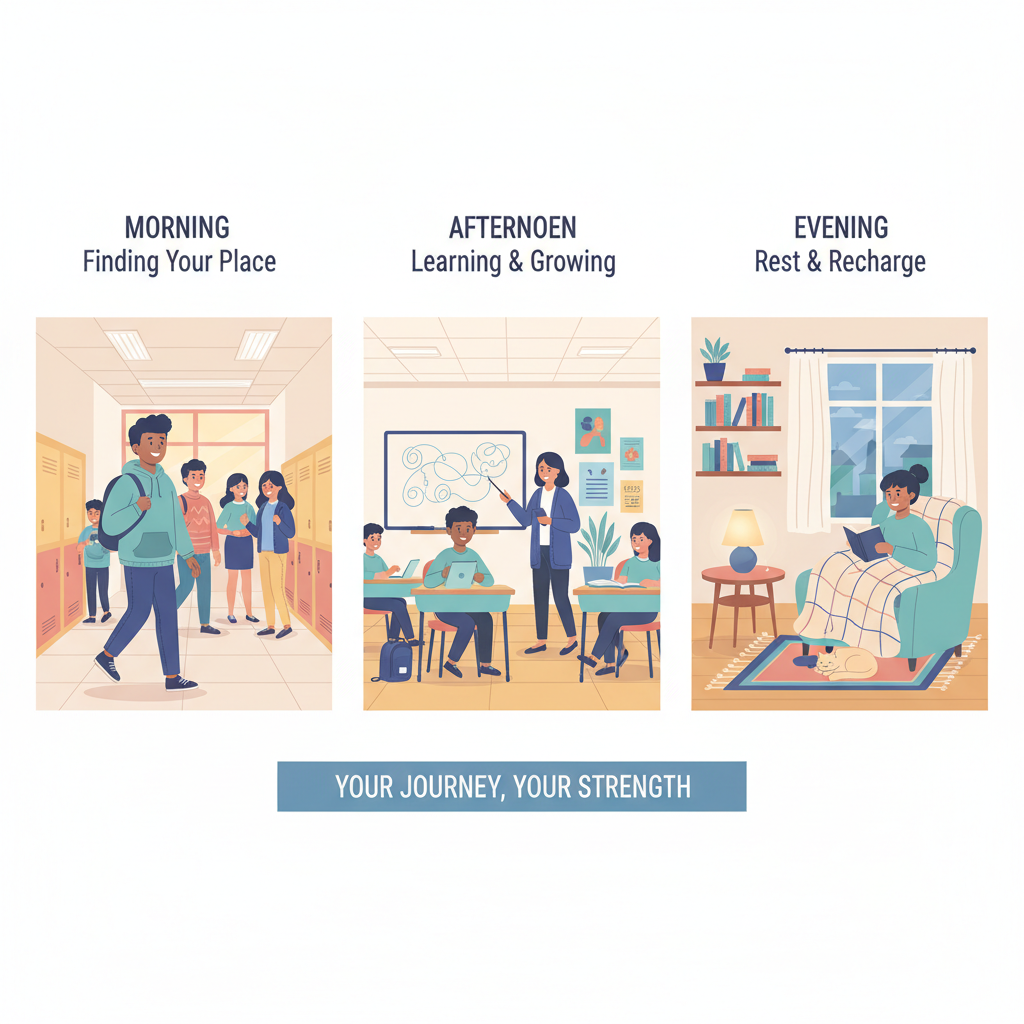
What Does a Typical Day Look Like for a Young Person with Special Needs?
A closer look at the everyday experiences, challenges, and strengths of young people with special needs
When we think about "a typical day," we often imagine a routine that feels familiar — waking up, going to school, spending time with friends, and coming home to relax.
But for a young person with special needs, a "typical day" can look very different.
Not because their life is completely separate, but because everyday environments — school, home, and social spaces — may require more effort, more support, and more adjustment.
Understanding what this might feel like is an important step towards empathy, inclusion, and meaningful support.
Starting the Day: Routine and Preparation
For many young people with special needs, the day often begins with the need for structure and predictability.
Simple routines — getting dressed, eating breakfast, preparing for school — can be affected by:
- Sensory sensitivities (e.g. clothing textures, food preferences)
- Anxiety about what the day might bring
- Challenges with organisation or transitions
What may seem like a small change — such as running late or altering a routine — can feel significant and overwhelming.
Having a consistent start to the day helps create a sense of stability and readiness.
Arriving at School: Entering a Busy Environment
School environments can be exciting, but they can also be demanding.
From the moment a student arrives, they are surrounded by:
- Noise from conversations, bells, and movement
- Visual stimulation from busy classrooms and corridors
- Social interactions that require communication and understanding
For some young people, this can make it harder to focus on learning, feel calm and settled, or engage confidently with others.
Even before lessons begin, a significant amount of mental energy may already have been used simply to manage the environment.
In the Classroom: Learning in Different Ways
During lessons, young people with special needs may experience learning differently from their peers.
This could include:
- Needing more time to process information
- Finding it difficult to filter out distractions
- Preferring alternative ways of learning (visual, practical, or hands-on)
Some may appear distracted or disengaged, when in reality they are:
- Trying to manage sensory input
- Working to understand instructions
- Coping with internal challenges not visible to others
Learning is not just about ability — it is also about how accessible the environment is.
Social Time: Breaks, Lunchtime and Friendships
Unstructured times of the day, such as breaks and lunchtime, can be some of the most challenging.
These moments involve:
- Navigating friendships and group dynamics
- Understanding unspoken social cues
- Managing noise and busy, unpredictable spaces
For some young people, social situations can feel overwhelming.
They may:
- Prefer quieter spaces
- Take more time to interact with others
- Need support to build and maintain friendships
At the same time, many young people with special needs value friendships deeply — they may simply experience them differently.
Managing Energy Throughout the Day
One important aspect often overlooked is the amount of energy required to get through a school day.
Young people may be:
- Concentrating harder than others to follow lessons
- Managing sensory sensitivities throughout
- Trying to meet social expectations
This constant effort can lead to:
- Fatigue
- Difficulty maintaining focus
- Emotional overwhelm
By the end of the school day, they may feel exhausted — even if it is not always visible to others.
Returning Home: Release and Recovery
After school, home often becomes a space where young people feel safer and more comfortable.
However, this is also when:
- Emotions that were held in during the day may come out
- Sensory or social fatigue becomes more noticeable
- Recovery time is needed before anything else
This might look like:
- Needing quiet time alone
- Becoming more emotional or overwhelmed
- Finding it difficult to complete additional tasks
This is not a sign of misbehaviour — it is often a response to the effort required throughout the day.
Every Experience Is Different
It is important to remember that there is no single "typical" experience.
Each young person:
- Has different needs and strengths
- Responds to environments in their own way
- Develops their own coping strategies over time
Some may require more support, while others may be more independent. What remains consistent is the need for understanding, flexibility, and consistent support.
What This Means for Everyone
Understanding a typical day from this perspective helps to shift how we respond as individuals, schools, and communities.
It reminds us to:
- Be patient and understanding
- Recognise effort, not just outcomes
- Adapt environments where possible
- Support inclusion in practical, everyday ways
Small changes — such as clearer communication, quieter spaces, or flexible approaches — can make a significant difference.
Final Reflection
A typical day for a young person with special needs is not defined by limitations, but by how they navigate the world around them.
Behind what we see on the surface, there may be:
- Effort
- Resilience
- Problem-solving
- Strength
By understanding these daily experiences more deeply, we move closer to creating environments where young people are not just supported, but truly able to thrive.
References
- Passarello, N. et al. (2022). Sensory Processing Disorders in Children and Adolescents (Brain Sciences)
- Child Mind Institute (2025). Sensory Processing Issues Explained
- National Sensory Network (2025). Understanding Sensory Processing in Teens and Young Adults
- National Autistic Society (2026). Sensory Processing and Daily Life
- Neurodiversity Support UK (2025). Sensory Processing Differences: Impacts on Daily Living