
Understanding Behaviour: Looking Beyond What We See
How understanding the reasons behind behaviour can transform the support we offer young people with special needs
Behaviour is something we notice every day.
In school, at home, and in social situations, behaviour is often how we judge what is "going well" or what might need support. But when it comes to young people with special needs, behaviour can sometimes be misunderstood.
Rather than asking: "Why is this behaviour happening?"
It can be more helpful to ask: "What is this behaviour trying to tell us?"
Understanding behaviour in this way is a key step towards supporting young people more effectively.
Behaviour Is a Form of Communication
One of the most important ideas to understand is that all behaviour communicates something.
When a young person struggles to express feelings, needs, or experiences using words, behaviour often becomes the way they communicate instead.
Behaviour may be a way of saying:
- "I don't understand this"
- "This is too much for me"
- "I feel overwhelmed"
- "I need help"
- "I feel anxious or unsure"
What may look like disruption, withdrawal, or frustration is often a signal that something else is happening beneath the surface.
Looking Beneath the Surface
Behaviour is rarely random. It usually has a cause.
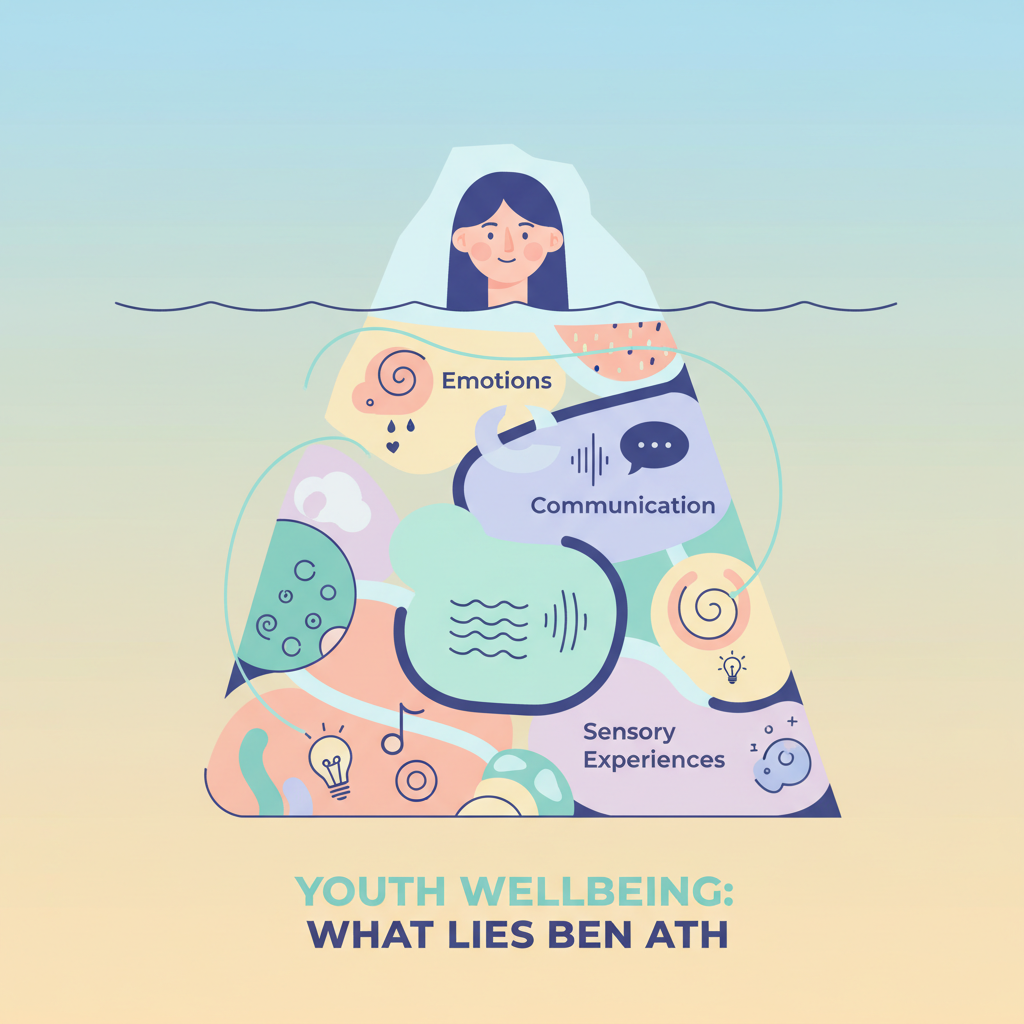
This is sometimes described using an "iceberg" idea:
- What we see (the behaviour) is only a small part
- Most of what is happening is hidden underneath
Underlying factors might include:
- Sensory sensitivities
- Communication difficulties
- Anxiety or emotional stress
- Difficulty understanding instructions
- Changes in routine or environment
Understanding behaviour means taking the time to look beyond the surface.
Common Reasons Behind Behaviour
While every young person is different, there are some common reasons why behaviour may occur.
1. Communication Difficulties
Young people may:
- Struggle to explain what they need
- Find it difficult to understand others
- Feel frustrated when they cannot express themselves
In these situations, behaviour can replace spoken communication.
2. Sensory Needs
Environments can sometimes feel overwhelming.
Noise, light, movement, or textures may:
- Cause discomfort
- Lead to sensory overload
- Affect focus and emotional regulation
Behaviour may reflect an attempt to cope with these experiences.
3. Emotional Regulation
Managing emotions can be challenging.
Some young people may:
- Feel emotions more intensely
- Struggle to calm themselves
- Find it difficult to recognise or express feelings
This can lead to visible reactions such as frustration, withdrawal, or outbursts.
4. Anxiety and Uncertainty
Situations that feel unpredictable — such as changes in routine or social settings — can cause anxiety.
This may lead to:
- Avoidance
- Resistance
- Heightened emotional responses
Again, behaviour is often a response to how a situation feels.
5. Environmental Factors
Behaviour is also influenced by the environment.
Factors such as classroom layout, noise levels, task difficulty, and peer interactions can all impact how a young person feels and responds.
Shifting Our Perspective
When behaviour is viewed only as something to "manage" or "stop", important information can be missed.
By shifting perspective, we move from focusing on the behaviour itself — to understanding the reason behind it.
This shift allows for more supportive, effective responses.
Practical Strategies to Support Behaviour
Supporting behaviour is not about punishment — it is about understanding and support.
For Parents and Carers
1. Observe patterns
- Notice when behaviours happen
- Look for triggers or changes in environment
2. Stay calm and supportive
- Respond with reassurance, not reaction
- Model calm behaviour
3. Help build communication
- Encourage different ways of expressing needs
- Give time and space to respond
4. Create safe and predictable routines
- Keep daily structure consistent
- Prepare for changes where possible
For Schools
1. Focus on understanding, not just managing
- Ask "why" a behaviour is happening
- Avoid quick assumptions
2. Use structured approaches
- Break tasks into smaller steps
- Provide clear instructions
3. Adapt the environment
- Reduce distractions
- Provide sensory support where needed
4. Teach alternative skills
- Support emotional regulation
- Teach communication and coping strategies
For Everyday Situations
1. Recognise effort
- Behaviour may reflect how hard someone is trying
- Acknowledge this effort
2. Be patient
- Give time to process instructions or situations
3. Build understanding in others
- Encourage empathy among peers
- Promote inclusive attitudes
Behaviour and Strengths
It is also important to remember that behaviour does not define a person.
Young people with special needs often bring:
- Creativity
- Problem-solving skills
- Empathy
- Unique perspectives
Understanding behaviour allows these strengths to be more visible and supported.
Final Reflection
Behaviour is not simply something we see — it is something we need to understand.
For young people with special needs, behaviour is often:
- A form of communication
- A response to the environment
- A way of coping
By looking beyond what we see and asking what lies underneath, we can:
- Respond with empathy
- Provide the right support
- Create environments where young people feel safe and understood
Understanding behaviour is not about changing the individual — it is about changing how we respond.
References
- SEND Network (2023). Understanding and Supporting Children's Behaviour
- American Speech-Language-Hearing Association (2017). Challenging Behaviour as Communication
- RCSLT (2025). Understanding the Links Between Communication and Behaviour
- Tevis, C. & Matson, J. L. (2022). Challenging Behaviour in Children with Developmental Disabilities (BJPsych Advances)
- SEND Vision (2025). Supporting Challenging Behaviour in Children with SEN
- Essential Education Group (2023). Understanding Theories of SEND and Behaviour
- Center on PBIS (2025). Supporting and Responding to Students' Behaviour: Evidence-Based Practices