What Does 'Special Needs' Really Mean Today?
Part 1 of 5 — Special Needs Series
When you hear the words "special needs", what comes to mind?
For some, it is a term heard in school or conversations about support. For others, it can feel unclear or even outdated. For many young people, it raises an important question: What does this really mean — and does it still matter?
This article explores what the term means today and how our understanding is changing.
This is Part 1 of a 5-part series on Special Needs. Part 1: What Does 'Special Needs' Really Mean Today? (you are here) Part 2: Understanding Different Types of Special Needs Part 3: Breaking Myths About Special Needs Part 4: Supporting Young People with Special Needs: Practical Strategies for Everyone Part 5: Creating an Inclusive Future
It's Not About "Less" — It's About "Different"
The term "special needs" is generally used to describe people who need additional support in certain areas because of how they learn, think, communicate, or interact with the world.
This may include:
- Learning differences, such as dyslexia
- Neurodevelopmental conditions, such as autism or ADHD
- Physical or sensory needs
- Emotional or mental health challenges
In education, this is often linked to special educational needs (SEN). This refers to young people who may find learning more difficult than others their age and therefore need extra support to access education effectively.
However, it is important to understand that needing support does not mean someone is less capable. It simply means they may require different approaches, tools, or environments to succeed.
A Shift in Thinking: From Labels to Understanding
The way people talk about special needs is evolving.
In the past, the focus was often on limitations — what someone struggled with or could not do. Today, there is a growing shift towards understanding the whole person, including both their strengths and challenges.
This change reflects a broader move towards:
- Recognising individuality
- Focusing on potential
- Removing barriers rather than changing the person
One of the key ideas behind this shift is neurodiversity.
What Is Neurodiversity?
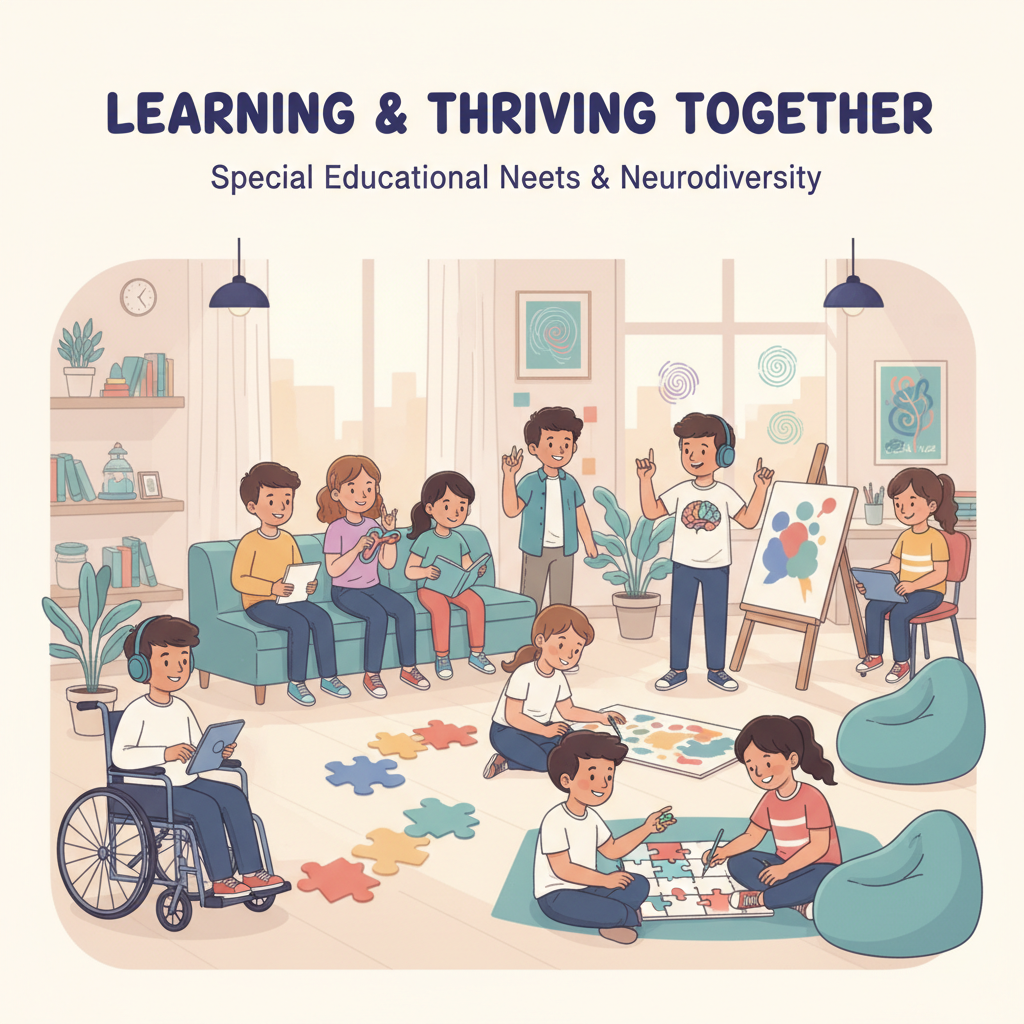
Neurodiversity is the idea that all human brains are different, and that there is no single "correct" way to think, learn, or behave.
It highlights that differences in brain function — such as those linked to autism, ADHD, or dyslexia — are a natural part of human diversity. People whose brains work differently from what is considered typical are often described as neurodivergent. These differences can bring both challenges and strengths.
For example:
- A person may find it harder to focus in certain environments
- At the same time, they may have strong creativity, problem-solving abilities, or attention to detail
This perspective moves away from seeing differences purely as problems and instead views them as variations in how people experience the world.
Why Language Matters
Language plays an important role in how people understand and treat one another.
The term "special needs" is still widely used, but some people feel it does not fully reflect their experiences. It can:
- Group many different needs into a single label
- Focus more on difficulties than strengths
- Unintentionally create a sense of separation
As a result, alternative language is becoming more common, including:
- "Additional needs"
- "Students with disabilities"
- "Neurodivergent"
There is no single "correct" term. What matters most is using language that is respectful, accurate, and inclusive — and being open to how individuals choose to describe themselves.
What This Means for Young People
For young people with special needs or who are neurodivergent, this shift in understanding is significant.
It means:
- Their differences are recognised, not ignored
- Their strengths are valued alongside their challenges
- They have the right to support that works for them
At the same time, this understanding is important for everyone. When young people develop awareness and empathy, it helps create:
- More inclusive friendships
- Supportive school environments
- Stronger communities
Moving Towards Inclusion
Understanding "special needs" is only part of the picture.
The wider goal is inclusion — creating environments where everyone can participate and succeed. This involves:
- Removing physical, social, and educational barriers
- Adapting systems to meet different needs
- Recognising that diversity strengthens communities
Inclusion is not about making everyone the same. It is about ensuring that everyone has the opportunity to thrive in their own way.
Final Thought
The meaning of "special needs" is changing as society becomes more aware and inclusive.
Rather than focusing only on labels, it is more useful to focus on individuality, support, and understanding. Every person experiences the world differently. Recognising and supporting those differences is key to creating a fair and inclusive society.